International
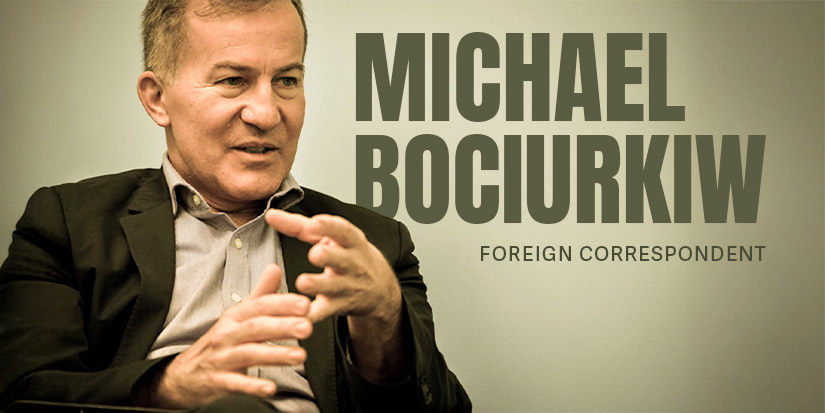
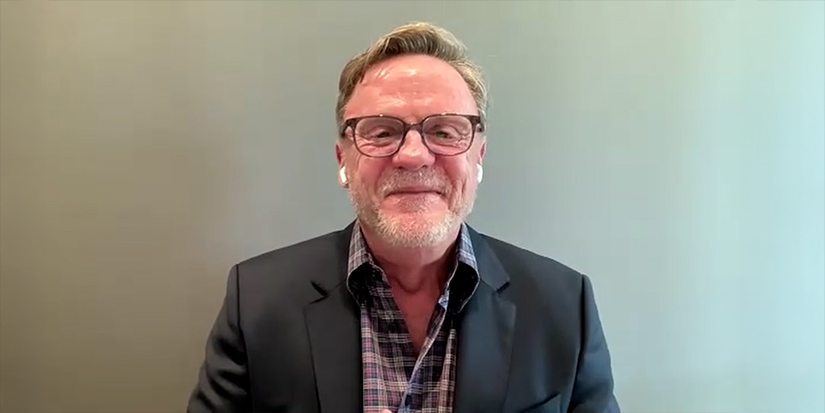
Provided by Michael Bociurkiw
On the front line with Michael Bociurkiw - The Life of a Foreign Correspondent

Published 3:59 PDT, Mon July 20, 2026


-
On the front line with Michael Bociurkiw
The Life of a Foreign Correspondent
Our City Tonight sat down
with Michael Bociurkiw to
discuss his decades of experi-ence as a journalist, humanitar-
ian aid worker, and global affairs
analyst. We wanted to learn what
it is really like to be a foreign
correspondent and work on the
front lines of major world events.
We last spoke with him in 2022
about his book Digital Pandemic:
COVID-19, How Tech Went from
Bad to Good
OCT: You’ve been doing a lot of travelling, and it’s great to have you back
in this part of the world. We’ve known each other for a long time, and
that you’re regularly called upon for your expertise on Ukraine and oth-
er global hotspots. You’ve appeared on CNN, BBC, CBC, and other net-
works, while also writing for publications such as The New York Times
and your Substack newsletter, “World Briefing”. What is it really like to do
the work that you do while travelling around the world?
MB: The first thing to know is that you’re always on call because news
doesn’t wait for you to wake up. I might be in one time zone and receive
a call from Canada, Australia, the U.S., or Europe, and I have to react im-
mediately. I know it’s not a great habit, but whether I’m at home or on the
road, the first thing I do is check my phone and look at the BBC and The
New York Times. In this day and age, you never know what’s going to hap-
pen. The news cycle moves incredibly quickly. You also have to maintain
your perspective and mental balance. I travel extensively, and when peo-
ple find out what I do, they often tell me that the news depresses them
and that they no longer watch it. That’s something I think about because
journalists are often seen as the purveyors of bad news. I always try to
find the silver lining in interviews and provide some sense of hope.
By now, I’ve appeared on television and radio so many times that
I’ve developed a rapport with many anchors, which makes things eas-
ier. Breaking news can be stressful, especially when there’s little time
to prepare. One philosophy I live by is that you’re only as good as your
last interview. You can do a fantastic interview, but if your next one goes
badly or you make significant mistakes, that’s what people will remem-
ber. The other thing people should understand is that journalists live the
news. We feel it, and we think about the people we report on. We have to
maintain our own internal equilibrium because the stories can affect us
as much as they affect viewers. Exercise, sleep, and spending time with
loved ones are all essential for staying balanced.
OCT: We’re always amazed by how calm you remain when doing multi-
ple interviews back-to-back, especially in places like Kyiv when all hell
seems to be breaking loose around you. Is that something you simply get
used to as a foreign correspondent?
MB: You do get used to it, but I often think about my late aunt, who lived
in North Saanich on Vancouver Island. She would always remind me, “Mi-
chael, you’re here for a reason. You’re doing these interviews for a reason,
and you’re doing this work for a reason.”
As simple as it sounds, before major interviews I often call upon her
memory for strength and support. It helps me get through those stress-
ful moments. Preparation is really the secret sauce. Even when cover-
ing breaking news and there’s limited time to prepare, I still do as much
preparation as possible because it helps calm me down. I keep notes in
front of me and focus on the facts. The worst thing you can do is guess or
speculate. That’s what gets people into trouble.
OCT: We understand one of the fascinating aspects of your work is the
conversations you have while travelling. You’ve visited some incredible
hotspots where discussions can become very intense. Recently, you
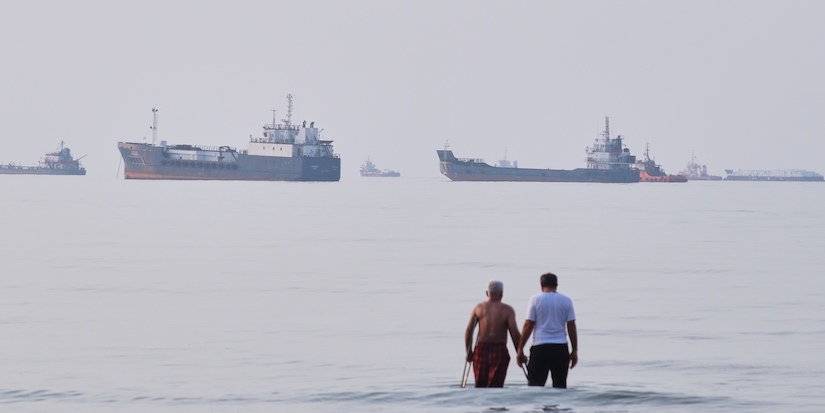
were in the Middle East near the Strait of Hormuz, which is making head-
lines right now. What was that experience like?
MB: My philosophy is simple: I don’t want to talk about events from an
air-conditioned newsroom thousands of miles away or from a retirement
community in South Florida. I want to be there and see things with my
own eyes. Recently, I’ve been on both sides of Iran. I was in Oman, directly
across from Iran, and more recently in Armenia, right on Iran’s northern
border. I was able to tell people what I was seeing firsthand and speak
with individuals who had fled the region.
The conversations I have are often the most memorable part of the
job. I’ve spoken with young families who had just welcomed a newborn
before being forced to flee. In Oman, I also spoke with a driver whose
concerns echoed countless conversations I’ve had since tensions be-
tween Iran, Israel, and the United States escalated. People consistent-
ly tell me that times are tough. Tourism has declined dramatically, and
fuel prices in many places have doubled. For taxi drivers and ride-share
operators, that creates enormous financial pressure. Many are working
18-hour days simply to put food on the table. That human impact is a
critical part of my storytelling. It can be difficult for people to fully grasp
the geopolitical complexities between Iran, Israel, and the United States.
But when you explain how those events affect ordinary people trying to
support their families, that’s what resonates and stays with audiences.
Follow Michael Bociurkiw through his Substack newsletter,
World Briefing, and at MichaelBociurkiw.com.













2 Hours of free financial consulting
Jai Xin Planning Ltd.
C$120.00 C$0.00

Use any of our home staging service and get a second month rental for free!
MiiX Interiors
C$500.00 C$0.00

Get 10% off any order
Phantom Screens Lower Mainland
C$200.00 C$180.00